Traditional Cedar Bluebird Nesting Box
Traditional Cedar Bluebird Nesting Box
Couldn't load pickup availability
Traditional Bluebird Nesting Box
This handmade cedar bluebird nesting box has been built specifically to meet the size and design standards bluebirds need to use and survive in a birdhouse.
Construction and materials: The box is made entirely from cedar, chosen because it holds up well outdoors for years without rotting. Assembled with nails and Titebond III wood glue, a waterproof adhesive often used in projects exposed to the elements. After assembly, the wood is sanded smooth and the exterior is treated with Thompson’s WaterSeal Clear Multi-Surface Water Repellent, which helps the wood resist moisture damage from rain and humidity over time.
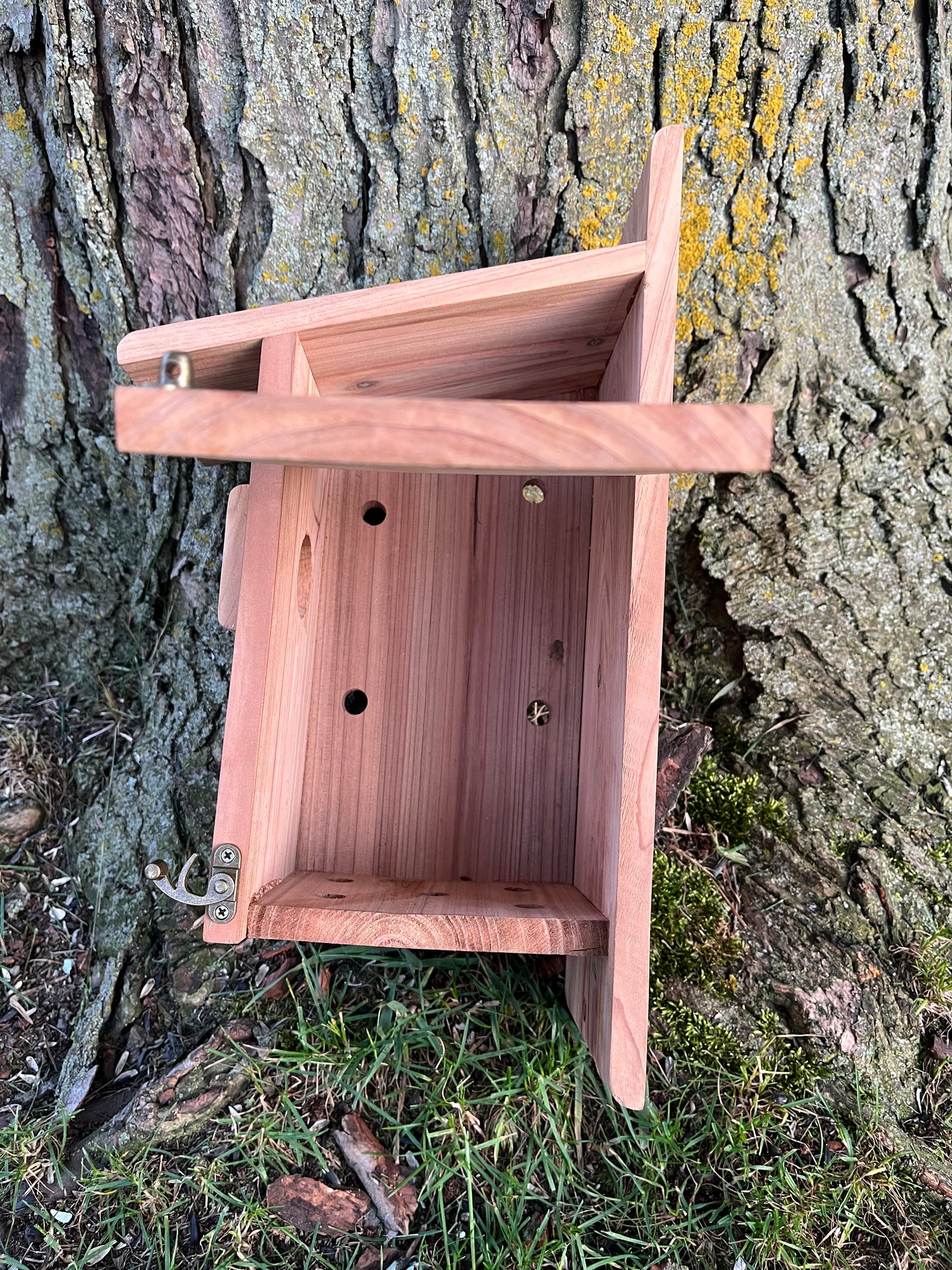
Dimensions: The interior nesting cavity measures approximately 5.25–5.5 inches by 4–4.25 inches, sized appropriately for Eastern Bluebirds, which prefer a snug cavity rather than an overly spacious one.
Ventilation: Eight vent holes, each a half-inch in diameter, are drilled around the box — four on each side, positioned near the top, and just above where the nest itself sits. This placement is intentional: it improves airflow through the box without creating drafts directly on the nest, helping keep nestlings cooler during hot summer weather while reducing the risk of overheating, which is a real danger for cavity-nesting birds in unventilated boxes.
Entrance hole: The entry is 1.5 inches in diameter, the standard size recommended for bluebirds because it’s large enough for them to enter comfortably but small enough to exclude larger competing birds like starlings. The hole also includes a predator guard, an added piece of hardware that makes it harder for predators (such as raccoons, snakes, or larger birds) to reach into the box and access eggs or chicks.
Roof design: The roof is built with a 15-degree pitch, angled so rain and melting snow run off rather than pooling or seeping in. It also extends past the front of the box in an overhang, which shields the entrance hole from wind-driven rain and direct sun, keeping the inside drier and more temperature-stable.
Clean-out door: One side of the box opens like a small door, secured with a latch so it stays closed during nesting but can be opened easily afterward. This is important because bluebird boxes need to be cleaned out between broods or at the end of each nesting season to remove old nesting material and reduce parasites or disease. The top edge of the door is rounded so the door opens easier. Instead of a standard hinge, the door pivots on triple-coated deck screws, which resist rust and corrosion outdoors far longer than typical uncoated hardware.
Shipping note: Shipping is available, but I ask that buyers message me before completing checkout if you would like to order more than one box. This is so shipping costs can be calculated and combined accurately.
Placement and mounting instructions:
• Mount the box 5-6 feet above the ground.
• Face the entrance away from the area’s prevailing wind direction, which prevents rain from blowing directly into the entrance hole. This generally means the box will need to be faced towards the east or south.
• Ideally, position the box near a clearing that has tall grass or shrubs about 8 to 12 feet away — bluebirds like open foraging areas near some cover, since they hunt insects from open ground but want nearby perches or shrubs for safety.
• Mount it securely, since a wobbly or unstable box can discourage nesting and may be more vulnerable to predators.
Timing: Bluebirds may not move in right away, and that’s normal — it can take time for birds to find and trust a new box. To maximize the chances of occupancy in the same season it’s installed, boxes should ideally be set up by February in southern regions, or by mid-to-late March in northern regions, timed to match when bluebirds in each area begin scouting for nesting sites.
Disclaimer: Because the box is made from natural cedar, wood color and grain pattern will vary from box to box. No two will look exactly alike — some may be lighter or darker, or show more pronounced grain lines, simply due to natural variation in the wood itself.
In short, this is a well-thought-out, conservation-minded bluebird house: properly sized, ventilated, weatherproofed, predator-resistant, and easy to maintain. With proper placement, bluebirds will have the best possible shot at successfully nesting your new box.
Share